

Understand how daily cashback works, its advantages, limitations, and who this card really makes sense for before applying.
If you’re already immersed in the Apple ecosystem (iPhone, Apple Pay, the Wallet app) you’ve probably wondered whether the Apple Card truly deserves a place in your wallet. No annual fee, daily cashback, a sleek titanium credit card with no visible numbers. It sounds great, but before anything else, it’s worth finding out if it actually holds up against the competition.
Here, we break everything down: the real benefits, the hidden limitations, and who this card is actually a good fit for.
What is the Apple Card, exactly?
The Apple Card is a credit card issued by Goldman Sachs and designed by Apple, specifically for iPhone users. You manage everything through the Wallet app, apply in minutes, can get approved instantly, and start using it via Apple Pay right away. No waiting for the card to arrive, no complicated processes.
True to Apple’s style, the experience is clean and simplified. No complex rewards categories or rotating offers, just a straightforward structure with a few cashback tiers and tools integrated into your phone.
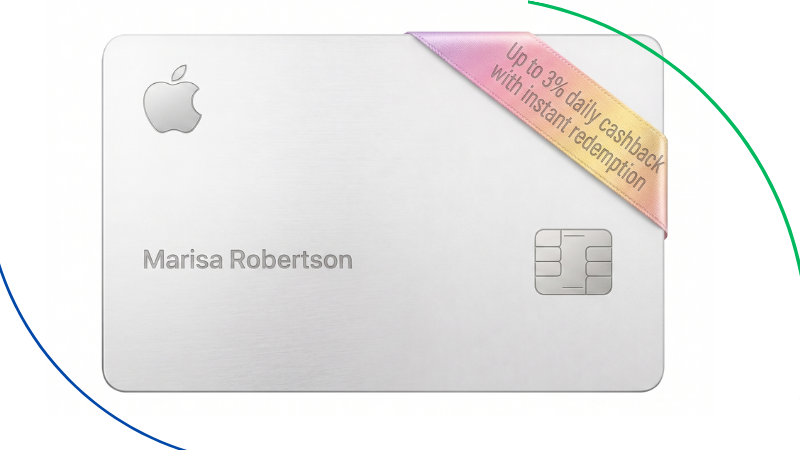
The physical card is premium and doesn’t display a card number, CVV, or expiration date, this information is securely stored in the Wallet app.
How cashback works: 1%, 2%, and 3%
The Apple Card’s cashback system (called Daily Cash) is one of its biggest advantages. Here’s how it works:
- 3% back on purchases made directly with Apple (App Store, Apple Music, Apple TV+, products and accessories) and at a growing list of partners like Nike, Walgreens, Uber, Uber Eats, Ace Hardware, Exxon Mobil, Hertz, ChargePoint, Booking.com, and Duane Reade, but only when you pay with Apple Pay.
- 2% back on all other purchases made with Apple Pay. Since Apple Pay is accepted at about 85% of U.S. merchants, this is where most of your spending will fall.
- 1% back when using the physical card, for places that don’t yet accept Apple Pay.
Unlike most credit cards that release rewards monthly, the Apple Card deposits cashback daily into your Apple Cash account. You can spend it, send it to someone, or transfer it to your bank. No minimum threshold and no expiration.
High-yield savings account option
One often-overlooked feature: you can route your Daily Cash directly into a high-yield savings account managed by Goldman Sachs, set up within the Wallet app.
Instead of letting your cashback sit idle, it earns interest automatically. This is especially useful for people who tend to forget about their accumulated rewards.
Apple financing: buy products interest-free
If you regularly buy Apple products, this is one of the card’s strongest features.
Apple Card Monthly Installments (ACMI) lets you split purchases of iPhone, Mac, iPad, Apple Watch, AirPods, and other products into monthly payments with 0% APR.
And here’s the key detail: you still earn 3% cashback on the full purchase amount, even while paying over time.
Available at Apple Stores, on apple.com, and in the Apple Store app, with the option to include a trade-in to lower your monthly payments.
For students, freelancers, or anyone who wants to avoid a large upfront expense, this feature alone can justify having the card.
Apple Card Family: building credit together
Apple Card Family allows you to share the card with a spouse, partner, or family members, including teens.
There are two roles:
- Co-owners: share the credit line and build credit history together
- Participants: can use the card and earn cashback but are not responsible for payments
It’s a smart way to manage finances as a couple or help younger users start building credit with supervision.
⚠️ Important: co-owners are responsible for the full account balance, this is a real financial partnership.
Downsides: where the Apple Card falls short
- 1% cashback on the physical card is weak. If you don’t use Apple Pay often, you’ll earn less than with many no-annual-fee cards offering 1.5% to 2% flat cashback.
- No welcome bonus. This is increasingly rare, many competitors offer $150 to $200 in initial cashback.
- Lack of premium perks, such as travel credits or airport lounge access.
If you are looking for maximum performance in rewards, there are stronger alternatives, such as:
Who should consider the Apple Card?
The Apple Card makes the most sense if you:
- Use an iPhone and rely on Apple Pay daily
- Frequently buy Apple products
- Prefer simplicity over complex reward strategies
It’s especially suitable for:
- First-time credit users
- Young adults
- People who feel overwhelmed by traditional rewards programs
The Wallet app provides clear spending insights, real-time estimates, and a no-hidden-fees experience, making financial management much easier.
You will remain on the current site.
